The voices behind the essays in our library. Economists, monetary historians and Bitcoin writers whose work is published under open licenses, republished here with attribution. Short version: smart people on money, saving and what happens when money breaks.

Economics
Philipp Bagus teaches economics at Universidad Rey Juan Carlos in Madrid, which makes him the rare professor who explains the euro's design flaws from inside the eurozone. His book The Tragedy of the Euro argues the currency was built with a quiet bias toward inflation, because every member state benefits from spending money the others effectively guarantee. Read him when a headline says the ECB had no choice. He will show you the choice, who made it, and who pays.
Read: The COVID-19 Crisis Is Driving the EU to the Brink
CC BY-NC-ND 4.0

Jeff Booth
Bitcoin and macro
Jeff Booth is a Canadian tech entrepreneur who looked at the deflation technology keeps creating and asked the obvious question nobody in finance wanted to ask: what if prices are supposed to fall? His book The Price of Tomorrow argues that an inflationary system sitting on top of a deflationary technology is the central tension of our time. Booth writes the way good founders talk, plainly and from first principles, and he gives his essays away, asking only for attribution.
Read: Finding Signal in a Noisy World
Standing permission, attribution

Vijay Boyapati
Bitcoin and economics
Vijay Boyapati was a Google engineer who wrote one essay in 2018 and changed how a generation of investors thought about Bitcoin. The Bullish Case for Bitcoin walks through how a new money grows up, from collectible to store of value to everyday currency, using gold's long history as the map. It is calm, patient and completely free of price predictions, which is exactly why it has outlived a thousand louder pieces. If a friend asks why Bitcoin has value, this is the link people send.
Read: The Bullish Case for Bitcoin
CC BY-SA 4.0 via SNI

Gigi
Bitcoin
Gigi writes under a pseudonym, signs his work dergigi, and produces the most philosophical writing in Bitcoin. His book 21 Lessons came out of falling down the rabbit hole and taking notes on the way: what Bitcoin taught him about time, value, scarcity and freedom. Where most Bitcoin writing argues about price, Gigi argues about meaning, and somehow makes both more interesting. He releases everything under an open license, practising the sharing his essays preach.
Read: The Freedom of Value
CC BY-SA 4.0
Economics
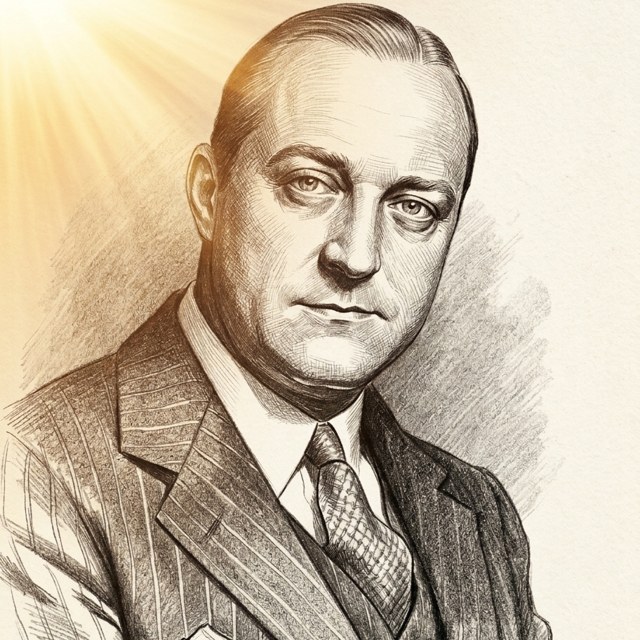
Henry Hazlitt (1894-1993) wrote Economics in One Lesson in 1946, and it remains the friendliest ambush in all of economics: one simple idea, that you must count the costs nobody sees, applied to everything. He wrote for The New York Times and Newsweek, helped launch The Freeman, and spent decades making the case that inflation is not a weather event but a policy, and a dishonest one. Eighty years on, his sentences still read like they were written this morning.
Read: Inflation vs. Immorality
CC BY 4.0 via FEE
Economics
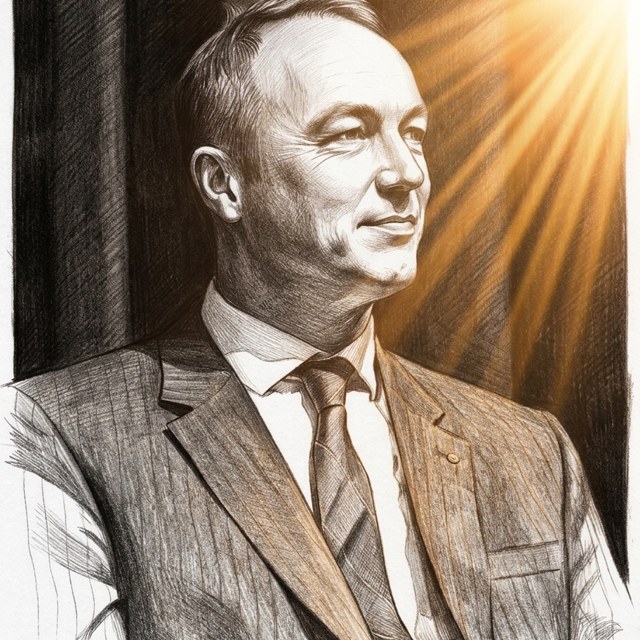
Jörg Guido Hülsmann is a professor at the University of Angers in France and the author of The Ethics of Money Production, the book that asks not just whether printing money works but whether it is right. His pamphlet How Inflation Destroys Civilization goes further than prices: debt becomes normal, saving becomes pointless, and a whole culture slowly reorganises itself around spending now. It is a short read with a long shadow.
Read: How Inflation Destroys Civilization
CC BY-NC 4.0 (pamphlet)

Daniel Krawisz
Bitcoin and economics
Daniel Krawisz co-founded the Satoshi Nakamoto Institute in 2013, when Bitcoin was still a curiosity, and then wrote some of its most quoted essays. Hyperbitcoinization, published in 2014, describes how a currency can tip from speculation to everyday money faster than anyone expects, the way a crowd suddenly leaves a theatre. His Mempool series treated Bitcoin as a serious subject for economics years before universities did, and the essays still reward a slow read.
Read: Hyperbitcoinization
CC BY-SA 4.0 via SNI

Parker Lewis
Bitcoin and macro
Parker Lewis wrote the Gradually, Then Suddenly series, named after the way Hemingway's character went bankrupt and the way Lewis believes fiat money ends: slowly, then all at once. Working from inside the Bitcoin industry at Unchained, he writes for the sceptical professional, the fund manager who thinks Bitcoin is a fad and has the spreadsheets to prove it. Piece by piece, calmly, he takes the spreadsheets apart. Start with Bitcoin Obsoletes All Other Money.
Read: Bitcoin Obsoletes All Other Money
CC BY-SA 4.0 via SNI
Economics
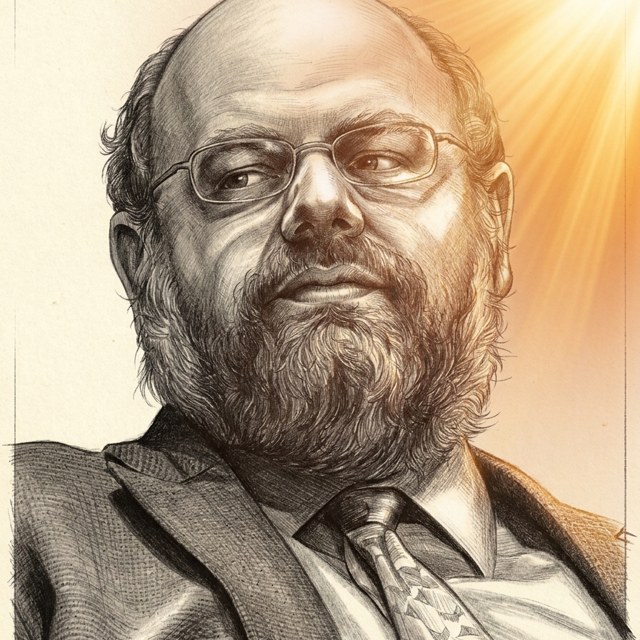
Robert P. Murphy is the economist other economists call when a textbook makes money sound more mysterious than it is. A senior fellow at the Mises Institute, he wrote Choice, the friendliest modern introduction to Austrian economics, and Understanding Money Mechanics, which explains exactly how new money enters an economy and who it reaches first. He also hosts the Bob Murphy Show and once famously challenged Paul Krugman to a debate, raising six figures for charity while waiting for an answer that never came.
Read: Understanding Money Mechanics
CC BY 4.0 (book)

Steve Patterson
Economics
Steve Patterson writes about the most underrated act in economics: not spending. In Savings: Fuel for an Economic Engine he makes the case that an economy grows because some people delay consumption and free up real resources for builders, not because everyone shops harder. It sounds obvious until you notice how much policy is built on the opposite idea. His essays for the Foundation for Economic Education are short, clear and quietly contrarian, a good first step into thinking like an economist.
Read: Savings: Fuel for an Economic Engine
CC BY 4.0 via FEE

Economics and macro
Thorsten Polleit is a German economist who spent years as chief economist at Degussa, Europe's big gold and silver house, which gave him a front-row seat to what people do when they stop trusting paper money. He writes with unusual bluntness for an academic: his best-known Mises Wire essay calls inflation a wealth redistribution scam in the title and then proves it in the body. If you want the saver’s side of the inflation argument stated without diplomatic padding, Polleit is your author.
Read: The Wealth Redistribution Scam that Is Inflation
CC BY-NC-ND 4.0 via Mises Wire

Pierre Rochard
Bitcoin and economics
Pierre Rochard co-founded the Satoshi Nakamoto Institute with Daniel Krawisz and wrote Speculative Attack in 2014, one of the most borrowed ideas in Bitcoin. The argument: a weakening currency invites a self-reinforcing attack, as people borrow the weak money to buy the strong asset, which weakens the currency further. Central bankers had used the term about attacks on their currencies for decades. Rochard calmly pointed out that Bitcoin had turned every saver into a potential attacker.
Read: Speculative Attack
CC BY-SA 4.0 via SNI

Economics
Murray Rothbard (1926-1995) was the engine room of modern Austrian economics: Man, Economy, and State, a shelf of history books, and a polemical energy that could power a small city. His short book What Has Government Done to Our Money? is the perfect first read on this page: barter, gold, debasement by kings, paper money and central banks, explained in an evening. Rothbard never met a monetary monopoly he liked, and his question from 1963 is still the right one to ask of every currency.
Read: What Has Government Done to Our Money? · original
CC BY 3.0 (5th edition)
Economics
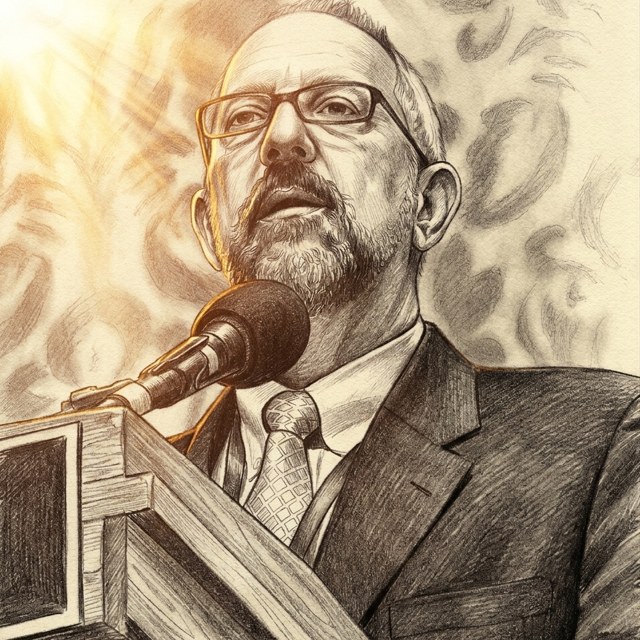
Joseph Salerno is the academic vice president of the Mises Institute and a professor emeritus at Pace University, and he carries a particular torch: with Rothbard, he rebuilt the measure of the true money supply, the statistic that tracks how much new money governments and banks actually create. His writing ranges from that technical core to surprises like the monetary history of China. If an argument about money needs a footnote that ends the discussion, Salerno usually wrote it.
Read: China's Monetary Tradition and the Origins of Money
CC BY-NC-ND 4.0 via Mises Wire

Alexander William Salter
Economics and macro
Alexander William Salter teaches economics at Texas Tech University and writes for AIER's Daily Economy, where he does something rare in monetary debates: he slows down and defines the terms. Is Inflation Really a Problem? takes the reader through what inflation does to contracts, savings and planning, and what a monetary system would look like if it were designed to protect savers instead of surprising them. He is one of the clearest young voices in monetary economics, and one of the most readable.
Read: Is Inflation Really a Problem?
CC BY 4.0 via AIER

Economics and macro
George Selgin is a senior fellow at the Cato Institute and one of the world's leading scholars of free banking, the once-normal system where competing banks issued money without a central bank conducting. His book The Theory of Free Banking is the field's landmark, and his Alt-M essays translate decades of research into plain arguments about what money is for. Selgin's favourite move is showing that the monetary arrangements we treat as inevitable were once considered absurd, and vice versa.
Read: Price-Level Movements, Fixed Nominal Contracts, and Debtor-Creditor Equity
CC BY-NC-SA 4.0 via Alt-M

Economics and macro
Frank Shostak has been explaining the money supply to anyone who will sit still for it for decades, through his firm Applied Austrian Economics and a long shelf of Mises Daily and Mises Wire essays. His signature claim, argued in Saving not Spending Is the Engine of Economic Growth, is that prosperity comes from the pool of real savings that funds production, and that pumping up spending drains the pool. Agree or argue, you will leave his essays knowing exactly what you think and why.
Read: Saving not Spending Is the Engine of Economic Growth
CC BY-NC-ND 4.0 via Mises Wire

Axel Weber
Economics and macro
Axel Weber writes about inflation for the Foundation for Economic Education. No, not that Axel Weber: this one never ran the Bundesbank, and his argument is aimed at the policies central bankers defend. Inflation Not Only Hurts, It Diverts makes a subtle point clearly: inflation does not just shrink what your money buys, it bends everyone's plans toward speculation and away from building things that last. Short, sharp and very quotable.
Read: Inflation Not Only Hurts, It Diverts
CC BY 4.0 via FEE

Keith Weiner
Economics
Keith Weiner founded Monetary Metals, a company that pays interest on gold in gold, which tells you most of what you need to know about his convictions. A sound-money writer for AIER and elsewhere, he spends his essays dismantling sloppy thinking on his own side as happily as on the other: Sound money isn't what you think it is is a title and a promise. If you like your monetary economics precise about interest, credit and what money actually does, Weiner delivers.
Read: Sound money isn't what you think it is
CC BY 4.0 via AIER

Economics and macro
Lawrence H. White is a professor at George Mason University and the historian monetary economists read: Free Banking in Britain and The Theory of Monetary Institutions reconstructed how money worked before central banks ran it. That makes his essay comparing a Bitcoin system to a gold standard unusually valuable, because he is one of the few writers who knows the gold standard from the archives rather than the slogans. Measured, exact and quietly devastating where he disagrees.
Read: How a Bitcoin System Is Like and Unlike a Gold Standard
CC BY-NC-SA 4.0 via Alt-M
No author matches that search yet.
A library of great writing on money and saving. Some of these authors appear as guests; every essay is republished under the license shown on its card.
Portrait sketches are pencil renditions of photographs credited as follows: Jeff Booth photo by Kkernahan, CC BY-SA 4.0, via Wikimedia Commons. Gigi avatar artwork by Gigi (dergigi), CC BY-SA 4.0, via 21lessons.com. Henry Hazlitt photo by the Mises Institute and the Henry Hazlitt estate, CC BY 3.0, via Wikimedia Commons. Jorg Guido Hulsmann photo by Gage Skidmore, CC BY-SA 3.0, via Wikimedia Commons. Robert P. Murphy photo by Gage Skidmore, CC BY-SA 2.0, via Wikimedia Commons. Murray N. Rothbard photo by the Ludwig von Mises Institute, CC BY 3.0, via Wikimedia Commons. Joseph T. Salerno photo by Gage Skidmore, CC BY-SA 3.0, via Wikimedia Commons. George Selgin photo by CongressmanRonPaul, CC BY 3.0, via Wikimedia Commons. Frank Shostak photo by Shai Avidan, CC BY-SA 4.0, via Wikimedia Commons. Keith Weiner photo by Kirez, CC BY-SA 4.0, via Wikimedia Commons. Lawrence H. White photo by ReasonTV, CC BY 3.0, via Wikimedia Commons. Authors without a portrait appear with a monogram.